

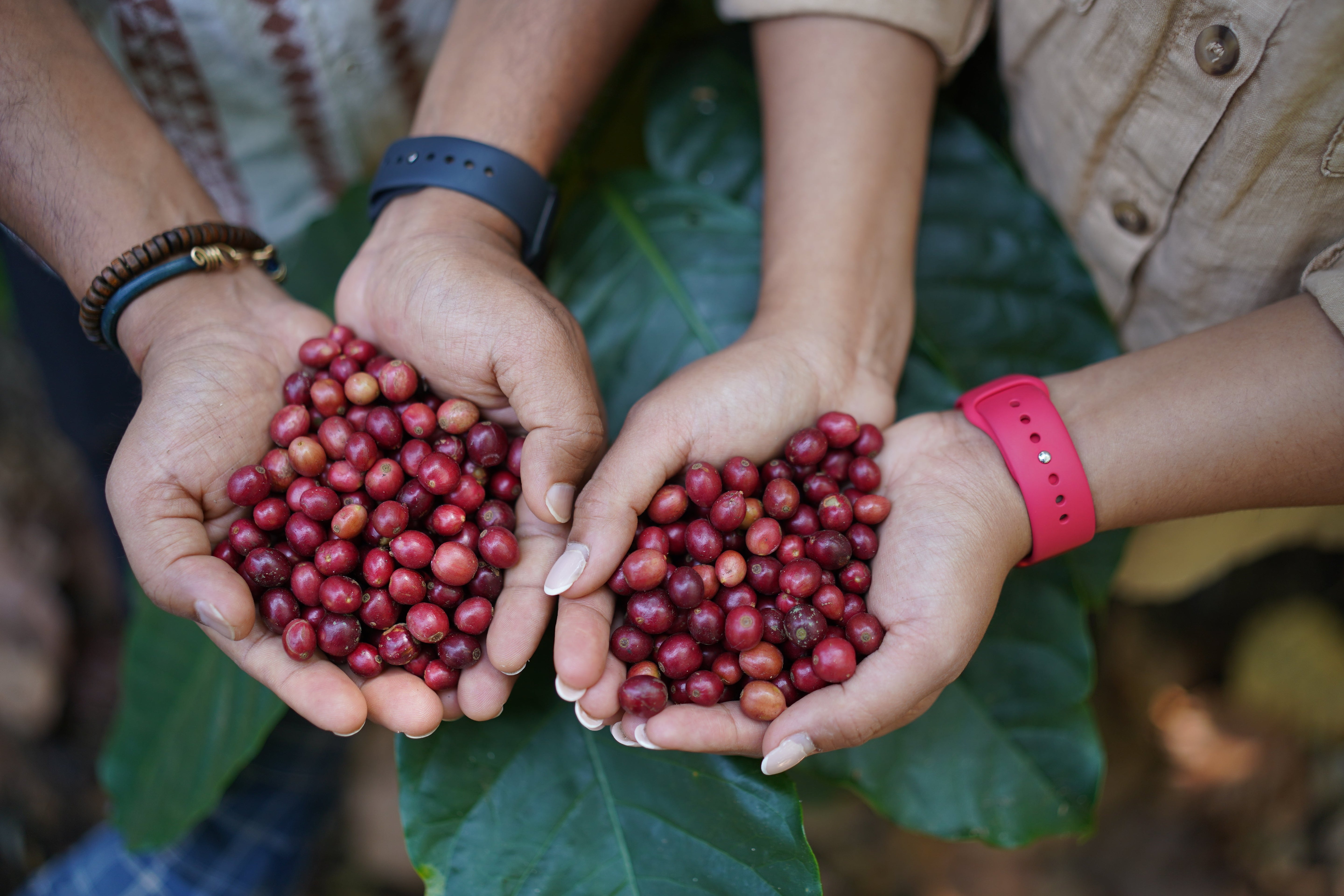
Top 10 lessons from a young Coffee business.
In 2023, my husband and I decided to start our coffee company. What began in the spring as a very casual, “Hey, let’s buy a coffee shop!” somehow transformed into us running a full-blown e-commerce business by the end of the year. Romantic, I know. Instead of traveling and enjoying our life, we spent the year buried in supply chains, coffee industry rabbit holes, and painful spreadsheets full of pricing models. We spent weeks perfecting the roasts and deciding the product proportions.
We made a ton of mistakes (like… so many), learned a thousand lessons, and kept coming back stronger—mostly because caffeine is a performance-enhancing substance. We also had a few wins sprinkled in. Looking back at that spring day when I turned to my husband and said, “Let’s invest in a coffee shop,” I genuinely think it was one of the best decisions of my life… mildly chaotic, but still the best.
By January 2024, we were officially selling. As of today, we’re on track to hit 400 Shopify orders and 1,500 Square transactions. If you want to sound fancy, you can say we’ve completed 2,000 orders in our first two years. Selling beans to 3 cafes and at 4 retail locations. And this number, of course, doesn’t include green bean sales. This is kind of unbelievable to me, because 2 years ago we didn't even exist.

It’s also important to point out the true cost of entrepreneurship:
My husband has lost enough hair to qualify for an early male-pattern-baldness support group, and I am now the proud owner of permanent dark circles that no serum on Earth can conquer. Entrepreneurship: glamorous since never.
But honestly? It’s been an exhilarating couple of years, and I’m wildly excited about where Le Mil's is headed.
As I reflect on everything, here are my top 10 lessons learned —or “things that matter the most if I ever lose my mind and start another small business.” It’s 10 because that’s how blogs work and I want to blend in with the rest of the internet. Each mantra comes with real-life Le Mils stories. If you want the extended, unfiltered version, message me. I’ve got material for a whole season of a Netflix dramedy.
10. Running a Marathon (Every. Single. Day.)
Life as a small business owner? Imagine running a marathon, but with surprise obstacles, random weather changes, and no finish line. Starting a business is shockingly easy: fill out a form, pay the fee… boom—you’re an entrepreneur. Running the business, however, is like entering a parallel universe.
Be prepared for late nights, physical strain, emotional strain, spiritual strain—basically all the strains. Orders come in last minute, strategies change, and you’re juggling more things than a circus performer. Personally, I hit a point where my brain refused to decompress. What saved me? Running. Lots of running. Bless the fact that I live near the beach.
9. Finances: The Profitability Roller Coaster
I spent months—actual months—trying to price our products correctly. I created more financial models than I care to admit. There were spreadsheets inside spreadsheets. At one point, I’m pretty sure my Excel sheets were talking to me.
After a year of experimentation, we finally dialed in our pricing and retail strategy. In the beginning, I approached everything like a textbook MBA: COGS, margins, OpEx… but at our scale, the math basically laughed in my face. Eventually we said, “Forget margins for now—let’s focus on revenue.” And boom, the fog cleared.
One day, when we hit 300–500 orders a month, we’ll revisit margins. Until then, revenue is queen.
8. Advice… & A Grain of Salt
One charming part of small business life is discovering that everyone suddenly becomes an expert on your business. Everyone. People with zero connection to coffee feel compelled to share advice. Some of it is helpful. A lot of it is… unwarranted.
We’ve had people tell us our name “doesn’t match our product,” suggest entirely new names, and offer branding advice that felt like it came from a parallel universe. If I earned a dollar for every unsolicited opinion, I’d have paid off all our startup costs.
The trick is simple: ignore half of it, and take the rest with a Himalayan pink salt. What worked for someone else may turn your business into a flaming disaster.
7. Keep it simple
Always try to keep everything straight forward and simple. Whether it's your product, product name, logo, just keep everything simple. Everything will change anyway and you'll need to adapt fast.
Of course, we learnt this too the hard way. We started with 9 different variations of our coffee. Took a year for us to realize which variations were selling the most so discontinued the ones that didn't and focused on the winners. It simplified our roasting, pricing, marketing and the pitch to the retail stores.
6. Time vs. Growth (The Cruel Relationship)
Your business will grow in direct proportion to the time you put into it. We both work full-time jobs but still squeeze in 30–40 hours a week on Le Mil’s. If we quit and focused solely on this business, we’d probably grow 10x faster. The reality is: in the beginning, there is no “work smart.” There is only “work hard” and “work harder.”
5. Team & Picking Up Crumbs
I believe in leading by example. If I expect someone to pack bags or sweep the floor, then guess what? I’m going to pack bags and sweep the floor first. This business is my baby—I have to be willing to carry the heavy sacks before asking anyone else to.
When you find people who are excited about your mission, hold onto them with both hands. People want to work with people—warmth, kindness, and authenticity go a long way. We had someone join us early on who wanted to learn roasting, and we encouraged them to pursue their passions and use Le Mil’s as a place where they can master the skills. That to me is collaborative effort.
4. Product, Product, Product
Like they say in real estate: location, location, location. In business: product, product, product. Marketing can be incredible, but if your product tastes like sadness and regret, no marketing strategy can save you.
There’s a scene in the movie Burnt where Bradley Cooper rages in French about throwing away imperfect dishes. I relate deeply, minus the ability to toss out full batches of coffee without crying over lost beans and sustainability guilt. Still, quality is queen.
3. Story / Spirit
Your story is your superpower. You’re competing with giants, but people buy from you because you’re you. In the beginning, customers bought our coffee for the story. They came back because they loved the product. That’s the dream combination.
2. Partnership
Running this business with my husband has been the biggest blessing. Doing this alone would’ve aged me another decade. Sure, we argue like it’s an Olympic sport, but at the end of the day, we share one mission: put Indian coffee on world map.
Two heads really are better than one… even if both heads are exhausted.
1. Passion
Back in 2011, fresh out of grad school, I worked at a small power electronics company. The CEO used to constantly ask “what is your passion?” and I remember thinking, Sir, I’m just trying to finish this design so I can go hiking this weekend. Passion meant nothing to me back then.
Now, 15 years later, I get it. Deeply.
Passion isn’t something you explain—it’s something you live. Today, I’m passionate about putting Indian coffee on the world map. And one day, Le Mils will have its moment. I can feel it.
Looking back at the whirlwind two years since starting Le Mil's, what began as a casual idea has blossomed into an actual business. Yes, it cost my husband some hair and me some sleep, but every painful spreadsheet and supply chain rabbit hole has been worth it. The journey to put Indian coffee on the map continues...

Milana Ramが執筆


コメントを書く
このサイトはhCaptchaによって保護されており、hCaptchaプライバシーポリシーおよび利用規約が適用されます。